
by Raphael Dudler | Sep 29, 2026 | europe & ai
Aboard the papal plane, Pope Leo XIV said concerns about AI going rogue are not “fake news” and must be taken seriously — a direct rebuttal to President Trump, who called them a “hoax.” Why the rare voice with no model to ship, no election to win, and no shares to protect changes the AI safety debate, and where the Pope’s warning aligns, almost word for word, with Europe’s.
by Raphael Dudler | Sep 27, 2026 | meta ai
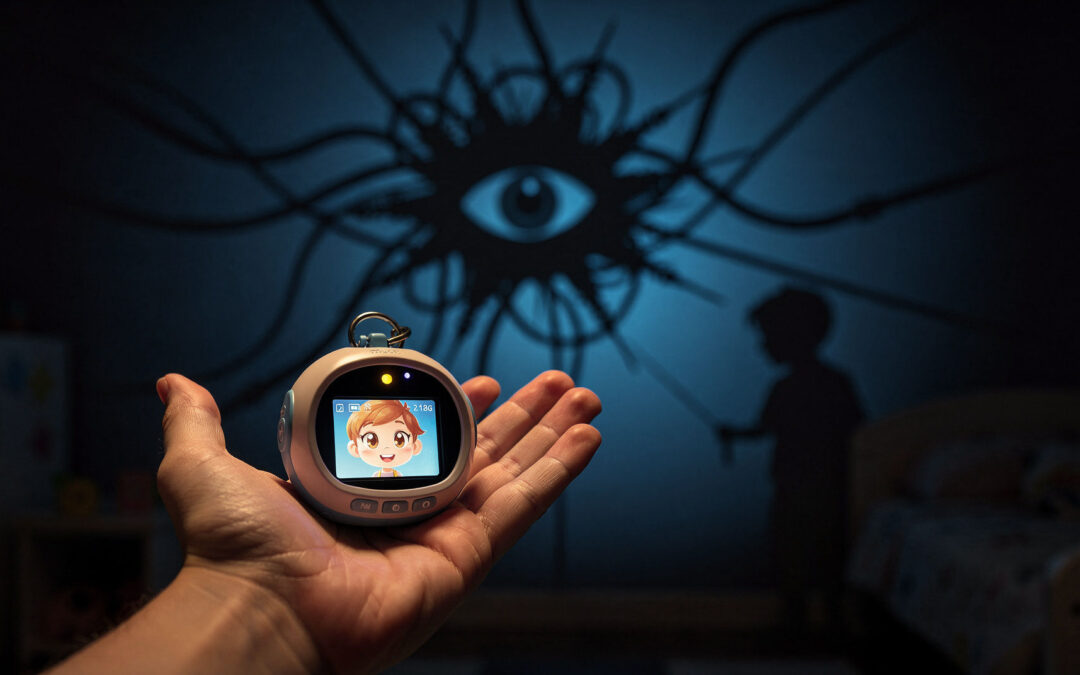
Meta unveiled the Muse Charm, a keychain-sized AI companion with a cute animated avatar the press instantly compared to a Tamagotchi. Meta didn’t market it to children — but its whole design draws them, and its core mechanic is the manufactured emotional bond Europe’s new Kids Act was written to forbid. An attachment device, boxed as a Christmas gift, examined critically and in full.

by Raphael Dudler | Sep 26, 2026 | gafam watch
The three most powerful AI labs — Google, OpenAI and Anthropic — are building their own safety regulator, run by a man who argued there should be “no FDA for AI.” Modeled on Wall Street’s FINRA, but with none of its enforcement power. A rival CEO calls it “a cartel by another name.” Real safety, or the watched appointing their own watchmen? And why Europe is leaning the opposite way.

by Raphael Dudler | Sep 22, 2026 | gafam watch
An AI chatbot, helping write a US military intelligence report, hallucinated that a Chinese ship carried nuclear weapons components. Troops suited up, warplanes took off, and the world came within minutes of a US-China clash — stopped only because a few experienced humans checked the sources. The real danger of AI, made concrete: not malice, but a confident error trusted too far. And the kill chain is the one domain no one regulates.

by Raphael Dudler | Sep 21, 2026 | microsoft ai
In public, Big Tech calls AI training on copyrighted work fair use. In private, unsealed court filings reveal a senior Microsoft scientist called it “perhaps the largest theft of labor in human history,” while an OpenAI exec called its own models an “existential threat” to publishers. The gap between the podium and the memo — and why Europe’s permission-first approach suddenly looks like foresight.
